Atlanta ATL Terminal Guide 2026: Airlines by Concourse
Atlanta ATL terminal guide: which airlines use Concourses T and A–F, how the Plane Train links them, and how to connect after an international arrival.
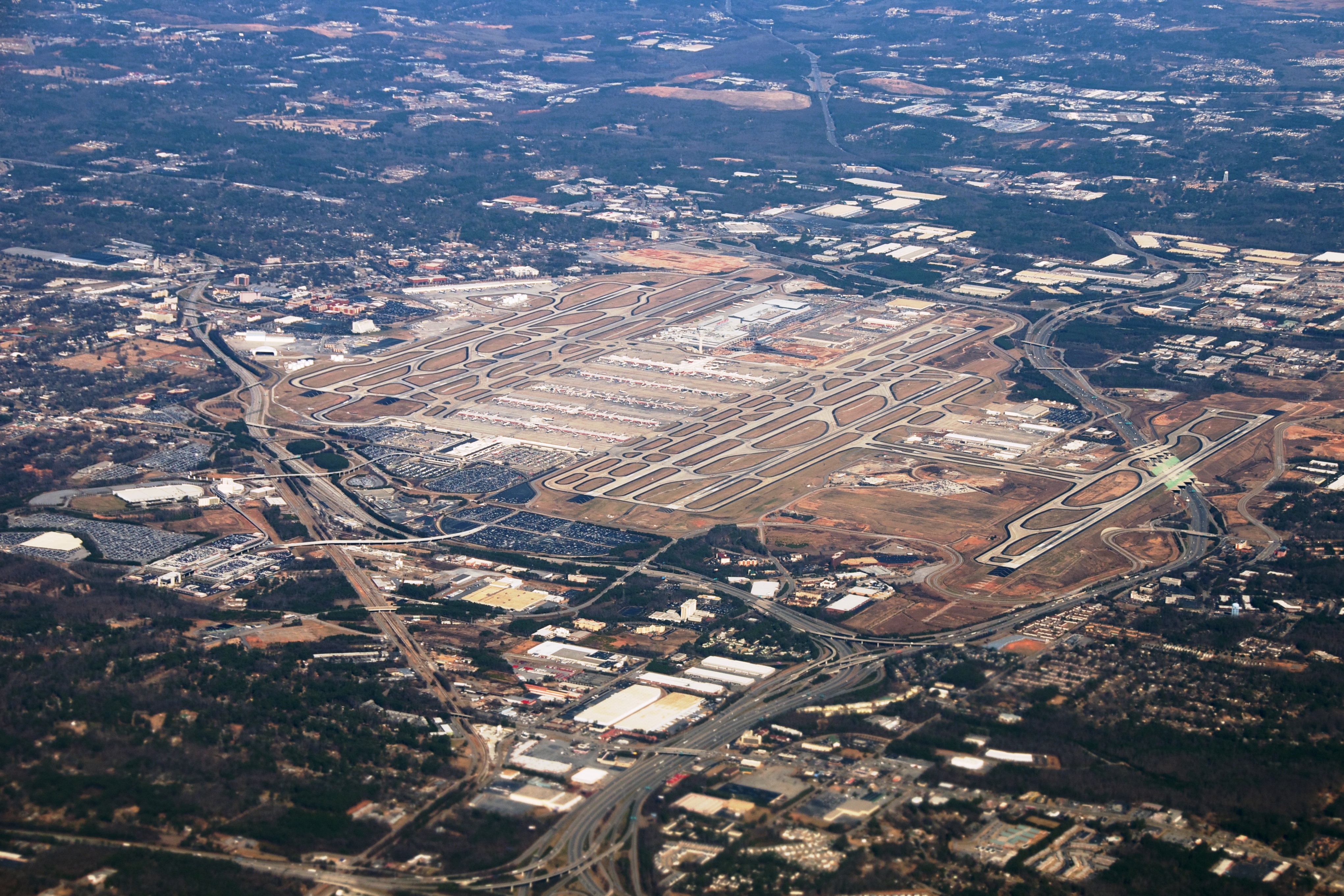
This Atlanta ATL terminal guide covers which airlines use which concourse and how to connect between them. Hartsfield-Jackson (ATL) has two terminals and seven concourses. The Domestic Terminal and Concourse T are on the west side. The International Terminal and Concourse F are on the east side. Concourses A through E sit in between.
Delta uses all seven concourses. Southwest and Frontier have their own bases, in Concourses C and E, and some Alaska flights also use C. Other domestic airlines without their own base use Concourse T. Non-Delta international airlines use Concourse F, with two exceptions: Aeromexico uses E, and some WestJet flights use D.
All seven concourses are linked behind security by an underground train and walkway, so a domestic connection never leaves the secure area. International arrivals are different: depending on the concourse, you may exit landside and go through security again (see below).
The airline-by-concourse details below are as of October 2026. Assignments change, so confirm on the airport's site (atl.com) and with your airline before you fly.
How ATL is laid out
From west to east, the airport looks like this:
- Domestic Terminal (west). You check in and collect bags here for most domestic flights. It has two entrances, called Domestic Terminal North and Domestic Terminal South. Follow the signs for your airline, or check atl.com to see which side it uses.
- Concourse T is attached directly to the Domestic Terminal.
- Concourses A, B, C, D and E sit side by side in the middle of the airfield.
- Concourse F is attached directly to the Maynard H. Jackson Jr. International Terminal (east).
A few terms help:
- A "concourse" is the long building where the gates are.
- "Airside" means the area past security.
- "Landside" means the public area before security.
Once you are airside, there are two ways to reach every concourse:
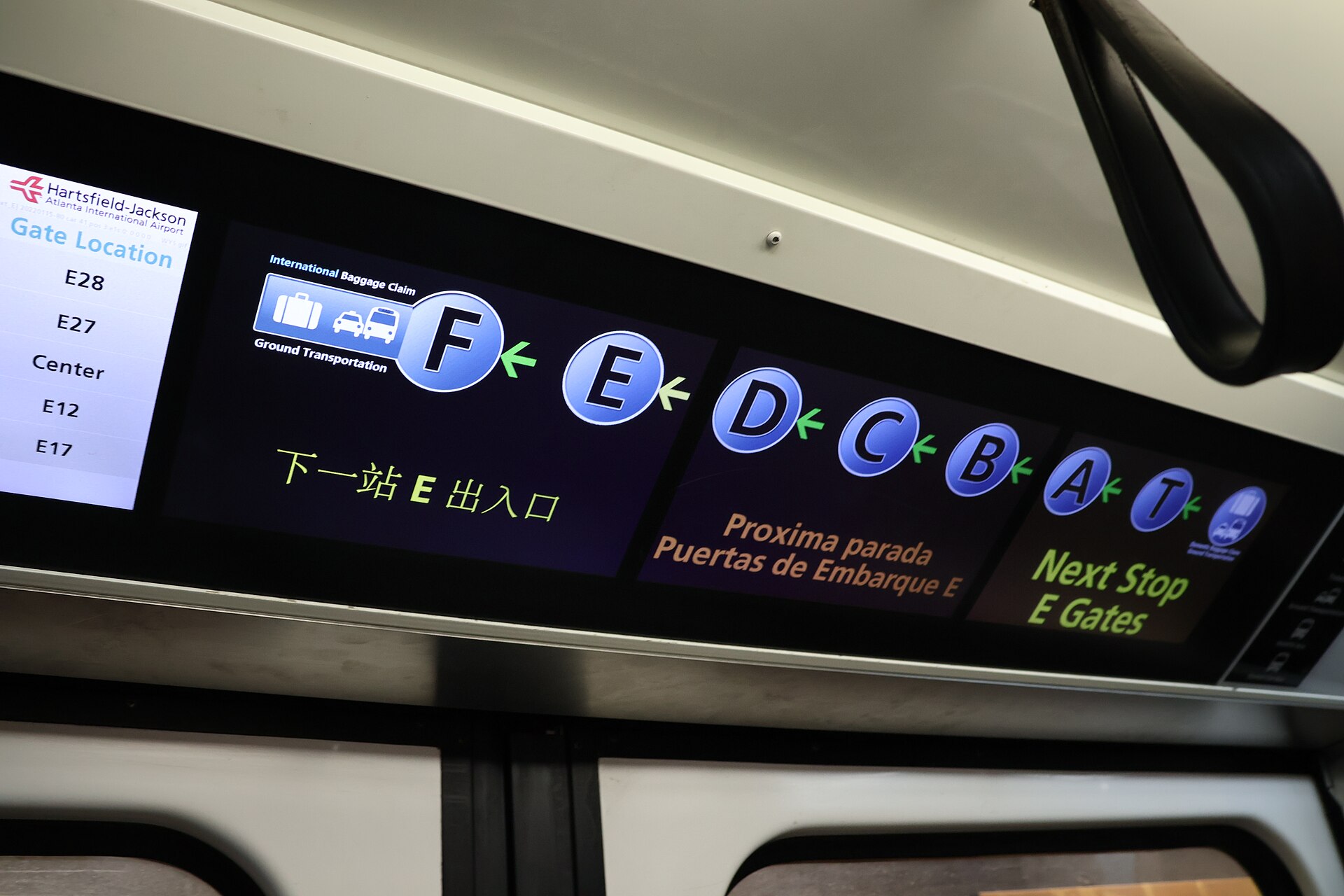
- The Plane Train. This is an underground automated people mover. It runs 24 hours a day and stops at each concourse.
- The Transportation Mall. This is an underground pedestrian tunnel with moving walkways. It runs along the same route, so you can walk instead.
Landside, the two terminals are on opposite sides of the airfield. If you arrive at the wrong one:
- Carry-on only and already checked in? You can usually clear security where you are and ride the Plane Train to your gate, because every concourse is joined airside.
- Checking a bag? You need your airline's counter. A free terminal-to-terminal shuttle runs between the Domestic and International terminals about every 15 minutes, from the International Terminal arrivals level between doors A1 and A2 and from the Domestic Terminal's west curb (atl.com, October 2026).
ATL terminal guide: airlines by concourse
The airport has 200 gates in total. As of October 2026, here is how they break down and who typically uses them:
| Concourse | Gates | Main users |
|---|---|---|
| T | 21 | South side: Delta mainline domestic. Also the domestic airlines that don't have their own base elsewhere. |
| A | 30 | Delta mainline domestic only |
| B | 32 | Delta mainline domestic only |
| C | 34 | North side: Delta Connection (regional). South side: Southwest's base, plus some Alaska and Frontier flights. |
| D | 40 | Some Delta and Delta Connection flights, plus some WestJet flights. Spirit has used some gates on the south side. |
| E | 31 | International flights, including Aeromexico. North end: Frontier's base. Spirit has used E too. |
| F | 12 | International flights, including non-Delta international airlines (except Aeromexico, and some WestJet flights) |
These points explain the table:
- Delta is everywhere. It operates from all seven concourses, so don't assume your Delta flight leaves from A or B. Check the gate on the day.
- Delta international flights leave from the concourses that handle international flights, E and F. Your boarding pass or the Delta app shows the gate; check Delta's site for which terminal to use for check-in and bag drop.
- Most of Delta's partner airlines use Concourse F. Air France, KLM, Korean Air, LATAM, Virgin Atlantic, Scandinavian (SAS) and WestJet are all listed there. Aeromexico is the main exception and uses Concourse E. Some WestJet flights use Concourse D.
- Southwest and Frontier have their own bases.
- Southwest is on the south side of Concourse C. Some Alaska and Frontier flights also use C.
- Frontier's base is at the north end of Concourse E.
- Other domestic airlines use Concourse T. If your airline isn't named above, expect T, and check your boarding pass or the airline's app to be sure.
- Concourse F is the only one with a gate for an Airbus A380. That's the double-decker jet, the largest passenger aircraft in the world.
Gates can change within hours of departure. Look up your flight on our flight status page. It shows the current terminal and gate, and the baggage belt once you land.
Domestic-to-domestic connections
On a domestic-to-domestic connection, you stay airside the whole time and don't go back through security. If both flights are on one ticket, your checked bag normally transfers automatically.
Here's the routine:
- Find your next gate first. Gates often change. Check the airline app or the screens near your arrival gate.
- Follow the signs to the Plane Train. The signs also point to the Transportation Mall.
- Choose the train or the walkway. The train is the simple default. The Transportation Mall follows the same route on foot, with moving walkways.
- Ride in the right direction. Trains run between T at one end and F at the other. Signs on the platform show which concourses are ahead.
How much connection time to allow
A minimum connection time is the shortest layover an airline will sell on one ticket. ATL doesn't have a single airport-wide figure. It varies by airline and by the type of connection, so check with your airline.
This table ranks ATL connections from easiest to riskiest:
| Connection type | What's involved | How much room to allow |
|---|---|---|
| Same airline, same ticket, domestic to domestic | Stay airside, take the Plane Train, bag transfers automatically | Least |
| Different airlines on one ticket, often in different concourses | Stay airside, possibly a longer ride across the airport; confirm your bag is checked through | More |
| International to domestic, with a bag to re-check | Customs, bag re-drop and a second security screening | Considerably more |
| Separate tickets | Possibly go landside, collect and re-check bags, check in again, clear security again; no protection if you misconnect | The most, by a wide margin |
Booking tip: When you book, look at the layover length shown before you pay. If you're putting two flights together yourself, ask each airline for its minimum connection time at ATL. Treat that figure as the floor, not the target.
For comparison with other big hubs, see our JFK terminal guide and Heathrow connection times.
Arriving internationally and connecting
International arrivals clear US Customs and Border Protection (CBP) at ATL, and how depends on which concourse you land at. The exception is flights from preclearance airports, including Toronto, Montreal, Vancouver, Calgary, Dublin, Shannon, Nassau, Bermuda, Aruba and Abu Dhabi: you clear US entry before departure and arrive at ATL as a domestic passenger, so none of the steps below apply.
Arriving at Concourse F and connecting
- Clear the CBP checkpoint in Concourse F.
- Exit into the landside area of the International Terminal.
- Re-drop any checked bags. Your airline and the airport decide where the bag re-drop is, so follow the signs or ask airline staff.
- Typically, clear security again at the International Terminal.
- Take the Plane Train to your next concourse.
Arriving at Concourse E and ending your trip in Atlanta
You walk through a dedicated underground walkway to the Concourse F checkpoint. You then exit at the International Terminal. Anyone meeting you should go to the International Terminal, not the Domestic Terminal.
Arriving at Concourse E and connecting
- Clear a separate CBP checkpoint in Concourse E.
- Go through a dedicated TSA checkpoint back into the concourse.
- Continue airside to your next gate.
There's no trip landside.
Customs and security queues vary a lot by hour and day, and nobody can promise a wait time in advance. Never plan an international-to-domestic connection as tightly as a domestic one. Allow more room if you'll land at a busy time or need to re-check a bag.
Before you fly to the US:
- Check your passport validity and entry requirements with our travel documents checker.
- If you're a visitor, read ESTA vs US visa to see which one you need and how early to apply.
Separate tickets and missed connections
If your two flights are on separate bookings, ATL's size works against you. You may need to:
- go landside to collect and re-check your bags;
- check in again with the second airline;
- clear security a second time.
If your first flight runs late, the second airline has no obligation to help you. Our guide to a missed connection on separate tickets explains who pays and what your options are.
Two guides can help you spot trouble early on travel day:
- How to find the inbound aircraft for your flight shows how to tell whether your plane is running late before the airline announces a delay.
- How to read a flight status, and when to actually worry explains what the status messages mean.
Practical tips for an easier day at ATL
- Match your entrance to your flight.
- For domestic departures, use the Domestic Terminal.
- For international departures from F, the International Terminal puts you closest to your gate.
- Because everything is linked airside, you can still reach any concourse once you're through security.
- Check cut-off times with your airline. Each airline sets its own check-in and bag-drop deadlines, not the airport.
- Ask for help early. If you need a wheelchair or assistance on the train, request it through your airline when you book or check in.
- If your flight is cancelled, see your rights when a flight is cancelled before you accept a rebooking.
Frequently asked questions
Which terminal is Delta at in Atlanta?
Delta checks in domestic flights at the Domestic Terminal. Its international flights leave from Concourse E (between the terminals) or F (attached to the International Terminal); check Delta's site for which terminal to use for check-in and bag drop. The domestic concourse split:
- Mainline domestic: the south side of Concourse T, and all of A and B.
- Regional (Delta Connection): mainly the north side of Concourse C, with some flights in D.
Gates can change, so check yours on the day.
Where do Southwest and Frontier operate at ATL?
Southwest's base is on the south side of Concourse C. Frontier's base is at the north end of Concourse E, and some Frontier flights use Concourse C. Both are reached through the Domestic Terminal and the Plane Train. Confirm on atl.com before you fly.
Do I have to go through security again when connecting at ATL?
On a domestic-to-domestic connection on one ticket, you don't, because all concourses are linked airside.
After an international arrival, you do:
- At Concourse F, you clear customs, exit landside, re-drop any checked bags and typically re-clear security before taking the Plane Train.
- At Concourse E, you clear customs and then a dedicated TSA checkpoint, without going landside.
How do I get between concourses at Atlanta airport?
Ride the Plane Train, an underground automated train that runs 24 hours a day and stops at every concourse. You can also walk the parallel underground Transportation Mall, which has moving walkways.