Atlanta ATL Layover Guide 2026: How Long You Need
ATL layover guide: how long to allow for domestic and international connections, getting between concourses, entry documents, and leaving the airport.
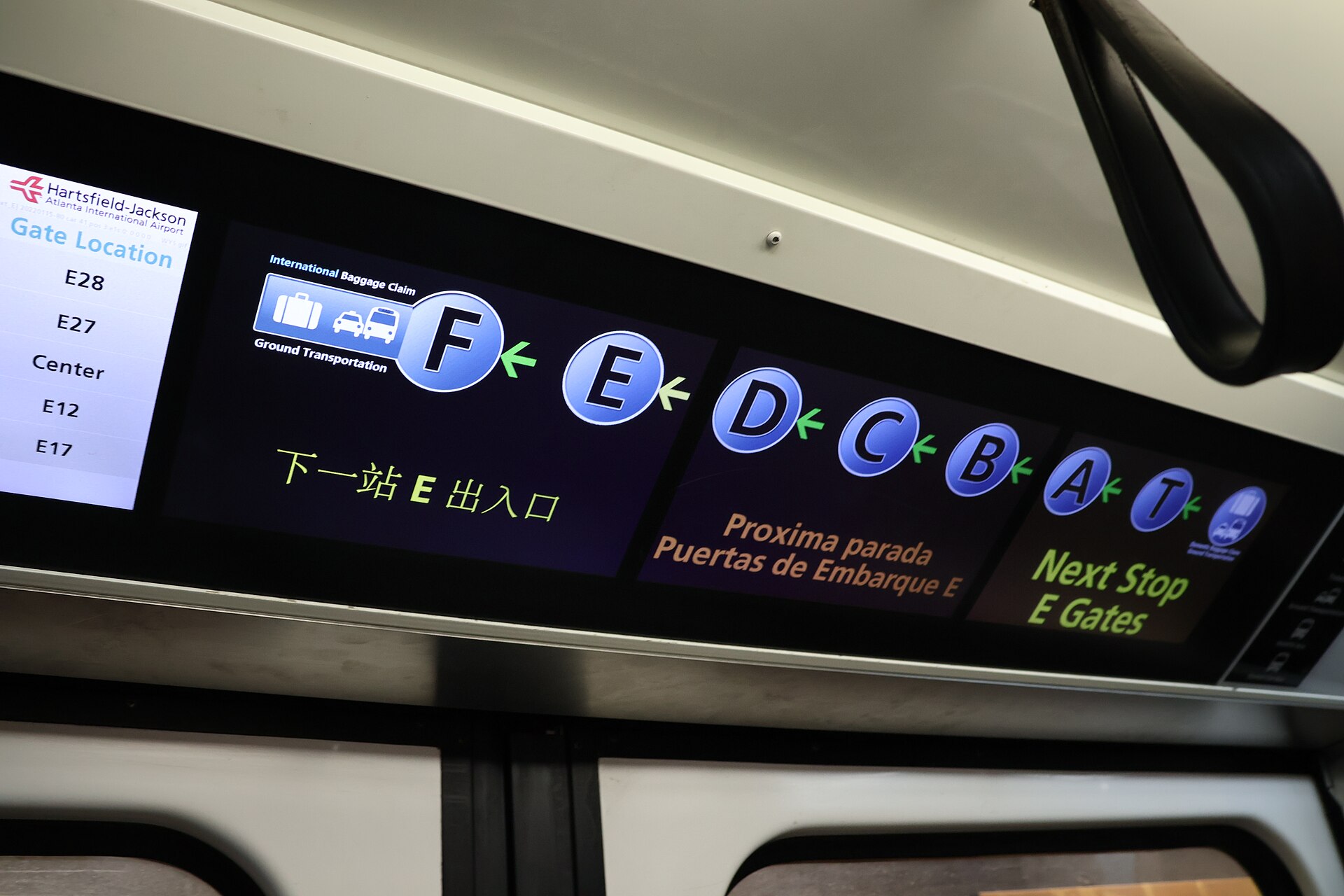
For an Atlanta (ATL) layover on one ticket, allow about 1 to 1.5 hours to be comfortable on a domestic connection. The airport is big but simply laid out, and an underground train links every concourse. If you are arriving from abroad and connecting, allow 2.5 to 3 hours. If you want to leave the airport and see Atlanta, you need roughly 6 hours or more.
Flying in from another country? You clear US immigration at ATL even if you're only connecting, so you need a US entry document before you board:
- US citizens and green-card holders need neither an ESTA nor a visa. Canadian citizens generally need neither.
- Visa Waiver Program nationals need an approved ESTA, even to connect.
- Everyone else needs a visa, typically a C-1 transit visa or a B visitor visa.
Check your nationality on our entry-requirements lookup before you book, and see ESTA vs US visa for timing.
How ATL is laid out (and why it's easier than it looks)
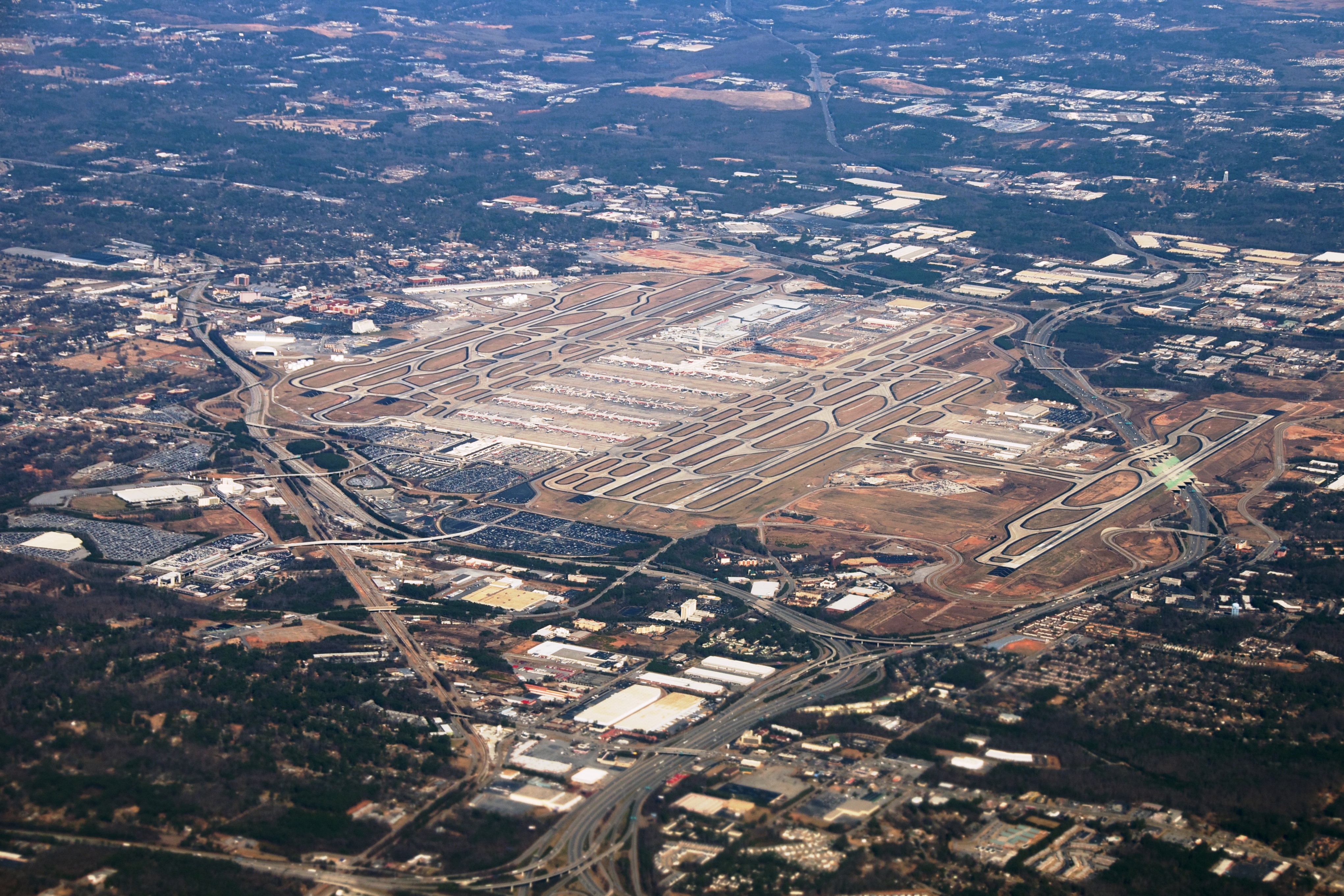
Hartsfield-Jackson has two terminals, seven concourses and about 200 gates. Concourses T and F sit at the two ends, attached to their terminals, with A to E parallel in between:
- Domestic Terminal on the west side, with Concourse T attached.
- Concourses A, B, C, D and E in the middle, side by side.
- Maynard H. Jackson Jr. International Terminal on the east side, with Concourse F attached.
All the concourses are joined airside by two underground links. "Airside" means the area past security, so you don't need to be screened again to use them:
- The Plane Train, an automated people mover that runs 24 hours a day.
- The Transportation Mall, a pedestrian tunnel with moving walkways.
Gate counts as of October 2026: T has 21, A has 30, B has 32, C has 34, D has 40, E has 31 and F has 12.
Who flies from where (as of October 2026; this changes, so check atl.com and your boarding pass):
| Airline | Typical concourse(s) |
|---|---|
| Delta mainline domestic | South side of T, all of A and B, some D |
| Delta Connection (regional) | Mainly north side of C, some D |
| Southwest; some Alaska and Frontier | South side of C |
| Frontier | North end of E; some flights in C |
| Other domestic airlines | T |
| Delta international | E and F (check your boarding pass) |
| Non-Delta international (Air France, KLM, Korean Air, Virgin Atlantic and others) | F |
| Aeromexico | E |
| WestJet | F; some flights D |
Delta runs a hub here and uses all seven concourses. A Delta-to-Delta connection may mean riding the train from one end of the airport to the other.
How long you need: a quick guide
These are our rules of thumb for a comfortable connection. They are not official minimums. Airlines set their own minimum connection times, and a connection your airline sells you on one ticket meets its minimum. But "legal" and "relaxed" are not the same thing, especially if you walk slowly or need wheelchair assistance.
| Your connection | Comfortable time | Why |
|---|---|---|
| Domestic to domestic, one ticket | 1 to 1.5 hours | No re-screening; the train covers the distance |
| Domestic to international departure, one ticket | 1.5 to 2 hours | Longer walks to E or F; check with your airline for boarding times |
| International arrival to any onward flight | 2.5 to 3 hours | Immigration, customs, bag re-drop and security again |
| Arrival from a US preclearance airport (see below) | 1 to 1.5 hours | You arrive as a domestic passenger |
| Separate tickets (any) | 3+ hours | You collect your bags, re-check them with the second airline and clear security again |
| Leaving the airport | 6+ hours | Travel into town and a full security line on the way back |
If you need wheelchair or mobility assistance, allow extra time and tell your airline when you book.
For comparison with other big US gateways, see how long a layover you need at LAX and our JFK terminal guide.
Arriving from abroad: what actually happens
International passengers clear US immigration and customs at the first US airport they land at, even if Atlanta is only a stopover. There is no airside transit that skips immigration at a US airport, so without the right document (see the top of this guide) the airline can refuse to board you abroad. For hubs that do allow airside transit, see transit visa rules by hub.
The exception: preclearance. Flights from airports with US border preclearance, including Toronto, Montreal, Vancouver, Calgary and other large Canadian airports, Dublin, Shannon, Nassau, Bermuda, Aruba and Abu Dhabi, clear US entry before departure. You land at ATL as a domestic passenger, so use the 1 to 1.5 hour row. Your airline can confirm whether your flight is precleared.
What happens next depends on which concourse you land at.
If you land at Concourse F, you go through the Customs and Border Protection (CBP) checkpoint there and exit into the public, landside area of the International Terminal. If you are connecting, you then go through TSA security again. Follow the connecting-flights signs. Once you're through, take the Plane Train to your next gate. Most non-Delta international flights arrive at F, so this is the route many travelers take. It is the main reason we suggest 2.5 to 3 hours.
If you land at Concourse E, the route depends on your plans:
- If Atlanta is your final stop, you walk through a dedicated underground walkway to the F checkpoint.
- If you are connecting, you clear a separate checkpoint on E, then go back into the concourse through a dedicated TSA security checkpoint.
Your bags. On an international arrival, you collect your checked bags after immigration, even on one ticket. You take them through customs and then drop them at your airline's connection bag drop. Follow the signs or ask staff. Then you clear TSA security again.
Each step can involve a queue, and wait times vary by hour and day. Programs such as Global Entry can shorten the immigration step if you qualify; our services section covers how they work.
What to do with 2 to 5 hours airside
With a few hours to spare, staying airside is usually the best choice. You can move between all seven concourses without being screened again, so you aren't stuck near your gate.
- Start with your gate number. Look up your departure gate before you do anything else. The letter tells you the concourse: T and F at the two ends, A to E in between, in that order. Plan your wandering around it.
- Eat near where you'll leave from. Each concourse has its own restaurants and shops. The simplest plan is to eat in your departure concourse or one stop away. That way your last move before boarding is a short walk, not a train ride.
- Walk part of the way. The Transportation Mall has moving walkways and is a good way to stretch your legs after a long flight. Walking the full length of the airport takes a while, so ride the train for longer trips.
- Lounges. Several airlines and card programs run lounges at ATL. Access rules, locations and opening hours change, so check with your airline or card issuer before you count on one. Our services section explains the main ways to get lounge access.
- Keep an eye on your gate. Gates at a hub this size do change. Check your airline's app, or look up your flight number on our live flight status page, which shows the current gate and terminal; how to read a flight status explains the wording.
Leaving the airport on a long layover
Downtown Atlanta is about 10 miles north of the airport.
Getting out. From your concourse, take the Plane Train to the Domestic Terminal and follow the signs for baggage claim and ground transportation. If you arrived from abroad, you are already landside in the International Terminal after CBP.
Getting into town. MARTA's Airport station is inside the Domestic Terminal, on the Red and Gold lines; from the International Terminal, a free shuttle runs to the Domestic Terminal about every 15 minutes. Taxis charge a flat fare to downtown. Our ATL to downtown guide has the routes, fares and pickup points, and itsmarta.com has current service.
Before you leave, run through this:
- Can you leave? If you've arrived from abroad, you were admitted to the US at immigration, so yes.
- What about your bags? On a single ticket, bags are checked through on domestic connections. On an international arrival, re-drop them at the connection bag drop after customs before you head out. On separate tickets you'll have collected your bags, so check atl.com for whether bag storage is offered before you plan around it.
- Budget the return. You will clear full TSA security again, and you'll need time to reach your gate. Security lines at ATL can be long at busy times.
Six hours is roughly the point where a trip into town becomes worth it. The arithmetic: take 2 hours off for getting back through security to your gate, and about 1.5 hours for the round trip into town, and 6 hours leaves you about 2.5 hours there.
What to do in town. That's enough for one thing near a downtown station: a meal, or one attraction around Centennial Olympic Park, such as the Georgia Aquarium or the World of Coca-Cola. Check opening hours and ticketing before you commit.
When the connection goes wrong
On a single ticket, if the airline's delay made you miss the connection, it rebooks you on its next available flight, and from Atlanta, Delta's hub, there are usually plenty. If you missed it for other reasons, such as a long immigration line or getting to the gate late, the airline may still help, but it doesn't have to, and it may charge a fee. To spot a delay early, see how to find the inbound aircraft for your flight.
On separate tickets, the second airline owes you nothing if your first flight is late. For that situation, read Missed Connection on Separate Tickets: Who Pays and What to Do.
If a flight is cancelled or badly delayed, Your rights when a flight is cancelled or badly delayed explains what US airlines must do, including refunds.
Frequently asked questions
Is one hour enough for a connection at Atlanta?
For a domestic-to-domestic connection on one ticket, it usually is, because you don't clear security again and the Plane Train links every concourse. It is tight if your first flight is late or you need mobility assistance. It is not enough if you are arriving from another country.
Do I have to go through security again when connecting at ATL?
Not on a domestic-to-domestic connection, or after a precleared flight, since all concourses are linked airside. If you arrive on an international flight, you go through immigration and customs, then TSA screening again before your next flight, whether you land at Concourse E or F.
Can I leave the airport on an ATL layover, and do I need a visa?
You need a US entry document even to connect (see the list at the top of this guide), and once you've been admitted you can leave if you have about 6 hours or more. Check what your nationality needs on our entry-requirements lookup.
Can I sleep at ATL on an overnight layover?
You can. The Plane Train runs 24 hours, so you can move between concourses at night. If you stay airside you won't be screened again; if you leave the secure area, you'll go through security in the morning, and after an international arrival you'll already be landside in the International Terminal. Shop, restaurant and lounge hours vary, so don't assume anything is open late. Check atl.com for current facilities, and our services section for lounge and lodging basics.