How Early to Arrive at Atlanta ATL (2026): Domestic vs International
How early to arrive at Atlanta ATL for domestic and international flights: our suggested arrival times, why the Plane Train matters, and which terminal to use.
If you're wondering how early to arrive at Atlanta ATL, plan to reach the terminal about 2 hours before a domestic flight and 3 hours before an international one. Add 30 to 60 minutes around holidays and during busy early-morning departure waves. Add more if you're parking off-airport or returning a rental car. (A departure "wave," sometimes called a bank, is a group of flights scheduled to leave close together at a hub.) ATL is big and spread out, and the walk or train ride from security to your gate takes time that smaller airports don't ask of you.
These figures are our suggestions as of October 2026. They are not official rules. Your airline sets the deadlines that actually matter, so check its site before you fly.
Why ATL needs more time than its size suggests
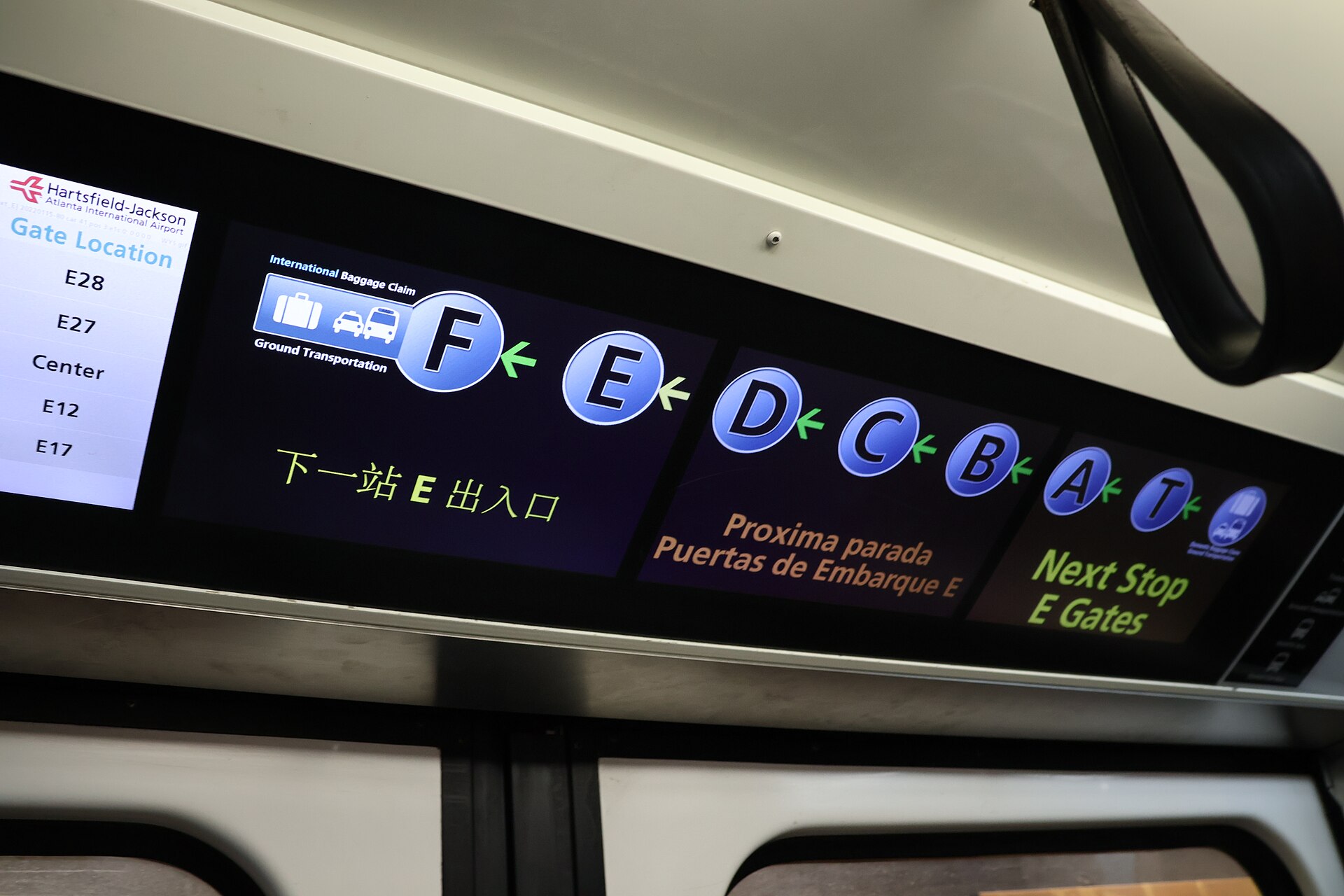
Hartsfield-Jackson has two terminals and seven concourses with about 200 gates in total. A terminal is the building where you check in and clear security. A concourse is the long building with the gates. At ATL, these are mostly separate.
- The Domestic Terminal is on the west side. It has two entrances, called Domestic Terminal North and Domestic Terminal South.
- The Maynard H. Jackson Jr. International Terminal is on the east side.
- Concourse T is attached to the Domestic Terminal, and Concourse F to the International Terminal.
- Concourses A, B, C, D and E sit between the two terminals, parallel to one another.
After security, you reach most gates by the Plane Train, an underground automated train that runs 24 hours a day. You can also use the Transportation Mall, a long underground walkway with moving walkways.
This layout is why ATL takes longer than people expect. Your trip through the airport is really four steps:
- Getting to the right building.
- Bag drop.
- Security.
- A train ride, plus a walk to the gate.
If you clear security in the Domestic Terminal and your gate is in Concourse E, you still have a Plane Train ride across the airport and a concourse walk ahead. Concourse D alone has 40 gates.
How early to arrive at ATL: domestic vs international
The table shows when we suggest arriving at the terminal curb. These times are measured from the curb. They do not include parking, shuttles or your drive. They are not airline deadlines.
| Your situation | Suggested arrival before departure | Why |
|---|---|---|
| Domestic, carry-on only, already checked in on your phone | About 1.5–2 hours | You skip bag drop but still need security plus the Plane Train |
| Domestic with checked bags | About 2 hours | Bag-drop lines and the airline's bag cut-off come first |
| International (any airline) | About 3 hours | Document checks at the counter, typically earlier cut-offs, longer boarding |
| Holiday weeks, spring break, busy early-morning departure waves | Add 30–60 minutes | Security lines tend to be longest when the airport is busiest |
| Need wheelchair assistance or traveling with small children | Add 30 minutes | Assistance can involve a wait, and everything moves slower |
| Returning a rental car or using off-airport parking | Add 30–45 minutes before the curb time above | Shuttles run to their own schedule, not yours |
Thanksgiving in 2026 is Thursday, November 26, so the heavy days are Wednesday the 25th and Sunday the 29th. The days around Thanksgiving are typically among the busiest of the year for US air travel. On those days, use the top of the holiday range, an extra 60 minutes, as your minimum.
The deadlines that actually matter: check-in, bag drop and boarding
Three cut-offs can cost you your seat even when the plane is still at the gate:
- Check-in cut-off. This is the latest you can check in.
- Bag-drop cut-off. This is the latest you can hand over a checked bag.
- Boarding-door close. This is when the gate agent stops letting people on.
Each airline sets its own times. They are typically earlier for international flights than for domestic ones. To find them, look on your airline's website for a page usually called something like "airport check-in" or "check-in and boarding times." Some airlines also print the cut-off in the booking confirmation.
Treat these times as hard deadlines. If you miss a bag cut-off, the airline may refuse the bag, and depending on the airline's policy you may be moved to a later flight.
A sample timeline. Say you have a domestic flight at 10:30 am, outside the early-morning rush, with one checked bag. You're parking at an off-airport lot. Work backward:
- Curb time. The table suggests 2 hours before departure for a domestic flight with a bag. 10:30 am minus 2 hours is 8:30 am.
- Parking and shuttle. Allow 45 minutes from pulling into the lot to stepping off the shuttle at the curb, the top of the table's 30–45 minute range. That makes 7:45 am.
- The drive. Say your drive to the lot takes 40 minutes at that hour. That makes 7:05 am.
So you leave home at about 7:05 am. For a flight in an early-morning wave, add the extra 30–60 minutes from the table to the curb time first. Use a realistic drive time for that hour, not a light-traffic estimate.
Getting to ATL: traffic, MARTA, parking and rideshare
The arrival times above only work if you reach the curb when you planned to.
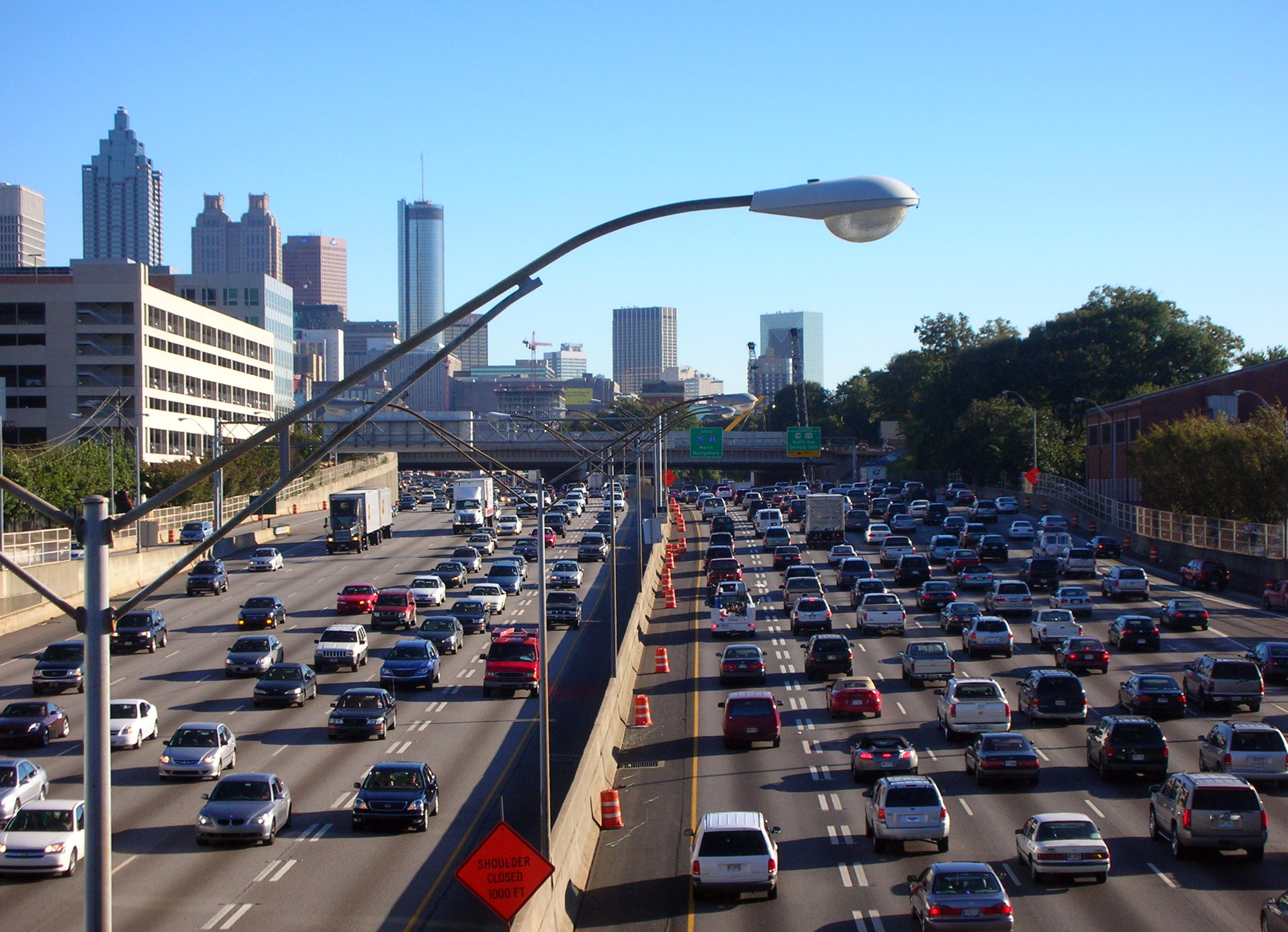
- Traffic. Atlanta's highways can be heavily congested at rush hour. Check a live traffic app before you leave rather than relying on a typical drive time.
- MARTA. Atlanta's rail system serves the airport, which takes traffic out of the equation.
- Parking. Besides the airport's own parking, off-airport lots run shuttles. Lots can fill around holidays, so reserve if you can.
For parking, MARTA and rideshare drop-off details, the airport's site, atl.com, is the place to check before you leave.
Go to the right terminal
The two terminals are at opposite ends of the airport, with five concourses in between, so the wrong building can cost you a train ride and a second trip through the airport.
Which building to check in at:
- Domestic flights typically mean the Domestic Terminal, with its North and South entrances. Check your airline's page or atl.com for which entrance to use.
- Non-Delta international airlines fly from the International Terminal and Concourse F as of October 2026: Air France, KLM, Korean Air, Virgin Atlantic and others. The exceptions are Aeromexico, which uses Concourse E, and some WestJet flights, which use Concourse D. If you're flying either, ask the airline which building to check in at.
- Delta international flights. Delta runs flights from all seven concourses. Check your booking and Delta's site for which terminal to use for check-in and bag drop.
Where your gate is likely to be. This is gate information, not where you check in. It reflects October 2026, and assignments change, so confirm on atl.com:
- Delta mainline domestic flights use the south side of Concourse T and all of Concourses A and B. Delta Connection regional flights mainly use the north side of Concourse C. Some Delta flights also use Concourse D.
- Southwest uses the south side of Concourse C, along with some Alaska and Frontier flights.
- Frontier's base is the north end of Concourse E.
- All other domestic airlines use Concourse T.
All the concourses are connected airside, meaning behind security, by the Plane Train and the Transportation Mall. Once you're through security you can reach any gate, but clearing security at one end and riding to the other takes time you should count.
Before you leave home, check your flight on our live flight status page. It shows the departure terminal and gate when the airline publishes them. Our guide on how to read a flight status explains what "scheduled," "estimated" and "gate change" actually mean. If you want an early warning of a delay, see how to find the inbound aircraft for your flight.
Security and the Plane Train
Security lines at ATL change by the hour. Early mornings, when many flights are scheduled to leave close together, tend to be busy. We can't give you a reliable wait-time number. On the day you fly, check atl.com for any current checkpoint information it publishes.
A few practical points:
- Bring the right ID. Since May 2025, TSA has required a REAL ID-compliant license (look for the star) or another acceptable ID, such as a passport, for domestic flights. Without one, TSA offers an optional paid identity check called ConfirmID, but you may not get through security in time. Check tsa.gov/real-id before you fly (checked October 2026).
- Trusted-traveler programs such as TSA PreCheck usually mean a shorter line and fewer items to unpack. They don't shorten the Plane Train ride, so don't cut your buffer to nothing. Our services section covers how these programs work.
- The Plane Train is quick and frequent. Still, allow time to walk to the station, wait, ride, and then walk the concourse. Gates near the far ends of the longer concourses, such as D with 40 gates, can be a long walk from the train.
- Mobility help. If walking long distances is hard, ask your airline for wheelchair assistance when you book. Then ask again at check-in.
International departures: extra steps before you fly
For international flights, the airline typically checks your passport and any visa or entry authorization at the counter or the gate before you board, even if you already have a mobile boarding pass. Problems found there can take a long time to sort out, and they can't always be fixed on the spot. That is a big part of why we suggest 3 hours.
Many countries require your passport to stay valid for 3 or 6 months beyond your trip, and airlines can refuse to board you if it doesn't. Run your dates through our passport and entry-requirements checker a few weeks before you travel. Our explainer on the six-month passport rule covers the details.
If you're arriving in Atlanta from abroad and connecting
This one is for inbound travelers: if you land at ATL from abroad and catch another flight, where you clear US Customs and Border Protection (CBP) depends on where your plane parks.
- Concourse E, connecting: a separate CBP checkpoint in Concourse E, then a dedicated TSA checkpoint back into the concourse.
- Concourse F: CBP in Concourse F, then out landside (the public side) into the International Terminal. If you're connecting, you'll usually need to go back through security.
Your airline's minimum connection time is a floor, not a target, because customs lines vary. On separate tickets, a missed connection is your problem: see missed connections on separate tickets. Visiting the US? Check ESTA vs a US visa well before you fly.
Frequently asked questions
Is 1 hour enough at Atlanta airport for a domestic flight?
Only rarely. You'd need to be carrying on bags only, checked in already, and flying at a quiet time. Even then, the Plane Train ride can make it tight. We'd plan on at least 1.5 to 2 hours at the curb.
How early should I arrive at ATL with TSA PreCheck?
PreCheck usually shortens the security line, but it doesn't change the walk, the train ride or your airline's cut-offs. With carry-on only, about 1.5 hours is a reasonable plan for a domestic flight. If you're checking a bag, stick with about 2 hours, and add more at busy times.
How early should I get to ATL for an international flight?
About 3 hours before departure, measured from the curb. Add more around holidays. Airlines' check-in and bag-drop cut-offs are typically earlier for international flights, and document checks take time.
Which terminal do I use for an international flight from Atlanta?
As of October 2026, non-Delta international airlines such as Air France, KLM, Korean Air and Virgin Atlantic fly from the International Terminal and Concourse F. Aeromexico uses Concourse E, and some WestJet flights use Concourse D. Flying Delta? Check your booking and Delta's site. Either way, confirm on atl.com or with your airline before you leave home.
How early should I arrive for a Delta flight at ATL?
The same times apply: about 2 hours for domestic and 3 hours for international, from the curb. Add 30 to 60 minutes around holidays and busy early-morning departure waves. As of October 2026, Delta operates from all seven concourses at ATL, so check your boarding pass for your gate. Then confirm on atl.com or Delta's site which terminal to use for check-in and bag drop. Delta sets its own check-in and bag-drop cut-offs, and you'll find them on its website.