Guides · Flying explained
Turbulence Explained: Why It Isn't Dangerous and Where It's Worst
Turbulence explained: what causes those bumps, why airliners are built to shrug them off, and which routes and seasons get the roughest air.
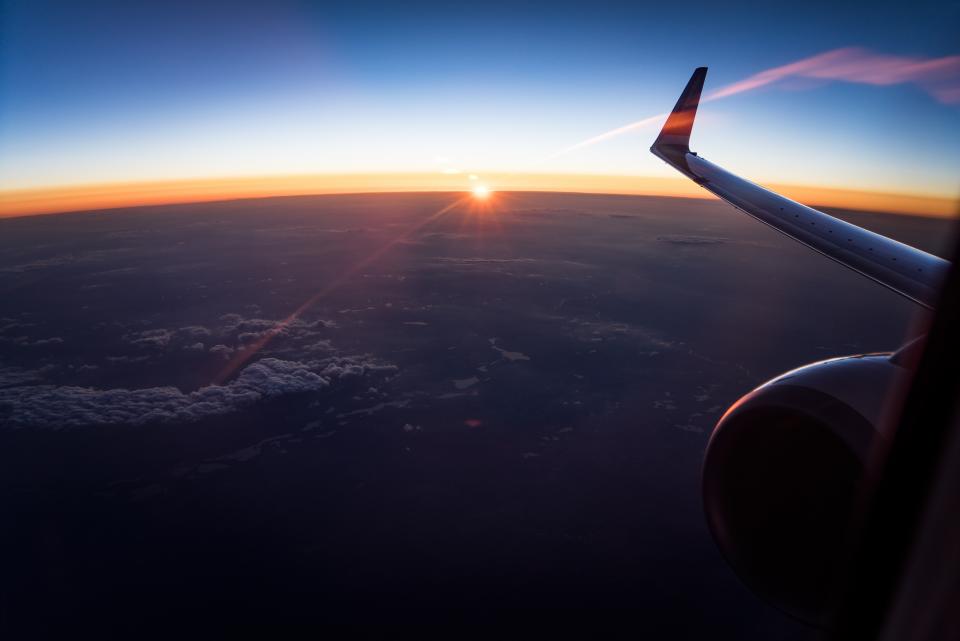
Turbulence is uneven air: pockets of air moving up, down or sideways at different speeds, which jostle the plane as it flies through them. It feels alarming, but a modern airliner is built to withstand forces far beyond anything normal turbulence produces, and pilots plan around the worst of it. The real risk is to people who aren't wearing a seatbelt, not to the aircraft.
What turbulence actually is
Think of a boat crossing choppy water. The water doesn't vanish beneath the hull. It just isn't flat. Air works the same way. A plane is always supported by air, and turbulence is what happens when that air is lumpy.
There's no such thing as an "air pocket" where the air disappears. When the plane seems to drop, it has moved from air that was rising into air that is sinking, or into a gust from a different direction. The height change is typically much smaller than it feels. Your inner ear exaggerates sudden vertical motion, so a jolt of a few tens of feet can feel like hundreds.
Most turbulence comes from one of five causes:
- Clear-air turbulence. This happens near the jet stream, the fast river of high-altitude wind that circles the globe. Where fast air slides past slower air, it churns, much like water around a rock in a stream. It's invisible and doesn't show on weather radar, which is why it can arrive without warning.
- Convective turbulence. Thunderstorms and towering clouds are driven by strong rising and sinking currents. Pilots steer well around storms, but the surrounding air can still be bumpy.
- Mountain wave turbulence. Wind blowing over a mountain range ripples downstream like water over a submerged rock. It can extend high above the peaks and well beyond them.
- Mechanical turbulence. Near the ground, wind tumbling over hills, trees and buildings makes takeoffs and landings bumpy on gusty days.
- Wake turbulence. Every plane leaves spinning vortices behind its wingtips. Air traffic control spaces aircraft apart to avoid them, so passengers rarely notice.
Why it's uncomfortable but not dangerous
Airliners certified in the US must withstand at least 2.5 times the force of gravity pushing up and 1 times gravity pulling down without damage. Their structure must then hold for an additional 50% beyond that before failing. Ordinary turbulence produces a small fraction of those forces.
Wings are designed to flex. On some newer jets you can see them bow upward in flight, and that flex absorbs gusts rather than fighting them. The autopilot and pilots don't try to hold the plane perfectly still in rough air. They keep it at a steady speed and attitude and let it ride the bumps, the way a driver eases off on a rough road.
Pilots also have a lot of information before they meet rough air. They get turbulence forecasts at briefing, reports from aircraft ahead of them on the same route, and radar for storms. If one altitude is rough, they ask air traffic control for a smoother one.
The danger is inside the cabin. Most serious turbulence injuries involve people who weren't seated and belted, very often flight attendants working in the aisle. In May 2024, a Singapore Airlines Boeing 777 hit severe turbulence over Myanmar. One passenger died, reportedly of a suspected heart attack, and dozens were injured, many of them thrown upward because they weren't strapped in. The aircraft landed safely. Events like that are rare, and the lesson is a simple one: keep your belt fastened whenever you're seated, even when the sign is off.
How pilots grade turbulence
Pilots and forecasters use four standard levels, defined by what you feel:
| Level | What it feels like in the cabin | How common |
|---|---|---|
| Light | Slight strain against your seatbelt; drinks ripple | Very common, most flights |
| Moderate | Definite strain against the belt; walking is hard; loose items move | Fairly common on some routes |
| Severe | Thrown hard against the belt; unsecured objects and people can be tossed around | Rare |
| Extreme | Aircraft violently tossed and hard to control | Extremely rare; pilots avoid known areas |
What most passengers call "terrible turbulence" is usually moderate. It's unpleasant, but well within what the aircraft is built for.
The routes and regions that get the most
Turbulence follows geography and weather patterns, so some routes are reliably bumpier than others. Independent forecasting sites such as Turbli publish annual rankings based on weather data. The routes that typically top them cross major mountain ranges, especially the Andes and the mountains of Central Asia.
| Region or route type | Main cause | When it's typically worst |
|---|---|---|
| Across the Andes (e.g., Santiago–Mendoza, Santiago–Santa Cruz in Bolivia) | Mountain waves | Strong westerly wind days, often winter in the Southern Hemisphere |
| Central Asia and the Himalayas (e.g., Almaty–Bishkek, routes over the Tibetan Plateau) | Mountain waves, jet stream | Winter and spring |
| US Rockies (e.g., flights into Denver, Albuquerque, Salt Lake City) | Mountain waves, afternoon storms | Windy winter days; summer afternoons |
| North Atlantic (US–Europe) | Clear-air turbulence near the jet stream | Winter, when the jet stream is strongest |
| North Pacific (US–Japan, Korea, China) | Clear-air turbulence near a very strong jet stream | Winter |
| Equatorial crossings (e.g., Europe–South Africa, US–South America) | Thunderstorms along the tropical rain belt | Year-round, mostly overnight on long flights |
| Florida and the US Gulf Coast | Afternoon thunderstorms | Summer afternoons |
| Southeast Asia and the Bay of Bengal | Monsoon thunderstorms | Monsoon season, roughly June to September |
The jet stream matters most on long flights. It's also why your flight to Europe may take a curved path and why westbound trips take longer. See why westbound flights take longer and why your flight to London goes over Greenland. To see which mountains or oceans your own route crosses, look it up on our route map tool.
Researchers at the University of Reading have found that clear-air turbulence over the North Atlantic has become more frequent since the late 1970s. They link the change to a warming climate strengthening wind shear at cruising altitudes. It's a trend worth knowing about, but it doesn't change the basic picture: aircraft are built for it, and seatbelts protect you from it.
How to get a smoother ride
You can't eliminate turbulence, but you can reduce how much you feel:
- Sit over the wings. The middle of the plane, near its center of gravity, moves the least. The rear rows typically bounce the most, like the back seat of a bus.
- Fly early in the day over land in summer. The sun heats the ground through the day, building rising air and storms by afternoon. Morning flights in Florida, Texas or the Rockies are often calmer.
- Choose larger aircraft where you can. A heavy widebody responds more sluggishly to gusts than a small regional jet, so bumps feel softer.
- Keep your belt on, loosely, the whole time you're seated. This is the single most effective safety step.
- Stow heavy items properly. Unsecured laptops and bags are what fly around in severe turbulence.
- Watch the horizon or close your eyes and breathe slowly. If you get motion sickness, ginger or an over-the-counter remedy taken before boarding helps some people. Ask a pharmacist which suits you.
If you're anxious, it can help to tell the flight attendant when you board. Crews are used to it, and some will warn you when the captain expects rough air ahead.
Does turbulence cause delays?
Sometimes. Pilots may slow down slightly in rough air, which is safer for the airframe and more comfortable. They may also route around storm areas, adding minutes. Thunderstorms near airports cause far more delays than turbulence en route, because they can stop takeoffs and landings altogether. If you're watching a flight, our guide on how to read a flight status explains what the different delay messages mean.
Frequently asked questions
Can turbulence make a plane crash?
For modern airliners in normal operations, this is essentially unheard of. Aircraft are built to withstand forces far beyond what turbulence typically produces, and pilots actively avoid the areas most likely to be severe.
Why is the seatbelt sign sometimes on when the air feels smooth?
Pilots often switch it on because a report from an aircraft ahead or a forecast warns of rough air coming up. Clear-air turbulence can also start without visible warning. The sign is a precaution, and it's worth obeying even when the ride feels calm.
Which seat feels turbulence the least?
Seats over or just in front of the wings usually feel the least motion, because that's closest to the plane's center of gravity. The back rows typically feel the most.