Guides · Fares
Do Flight Prices Go Down the Week Before Departure? Usually Not
Do flight prices go down the week before departure? Rarely. Here's why fares usually climb in the last 7–14 days, the exceptions, and what to do instead.
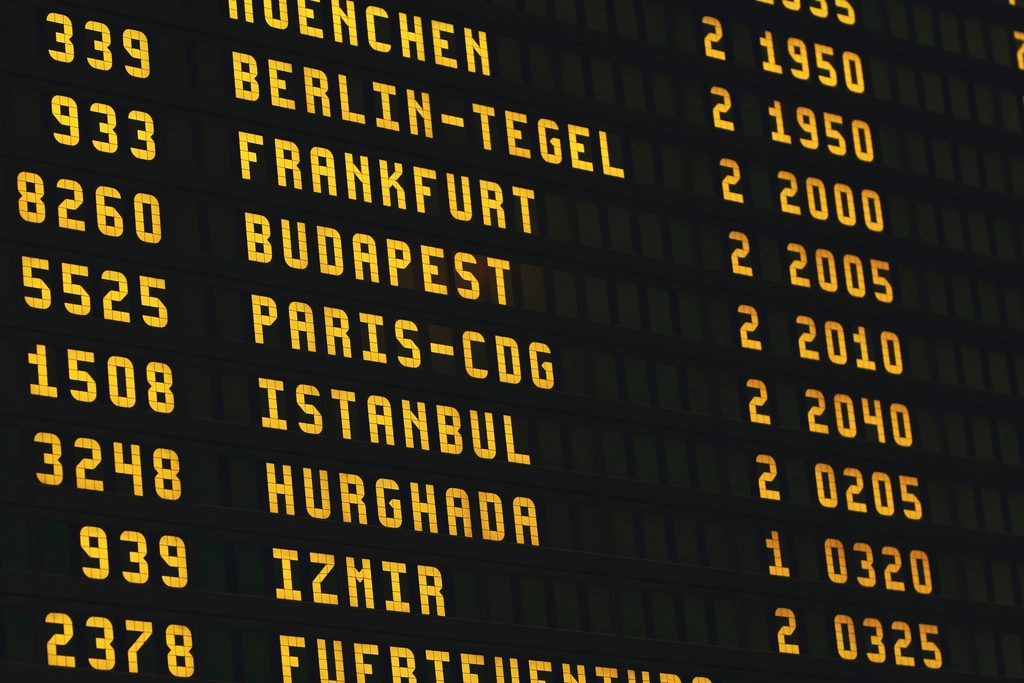
On most routes, flight prices go up in the week before departure, not down. Airlines deliberately save their highest fares for the final days, because that is when the least price-sensitive travelers book. Last-minute drops do happen, but they are the exception, so treat them as a pleasant surprise rather than a plan.
Why fares usually rise in the final week
Airlines don't set one price per flight. They divide the economy cabin into a dozen or more fare classes, often called "buckets." Each bucket is a price tier with its own rules and its own small allotment of seats. Software called a revenue management system opens and closes these buckets as the flight fills. For the full picture, see how airfares are actually priced.
Three things push prices up as departure approaches:
- The cheap buckets sell out first. As seats go, the system closes the lowest tiers, so the next traveler sees a higher price. By the last week, the cheapest buckets are usually gone.
- Advance-purchase rules expire. Many lower fares carry a condition like "must be booked at least 7, 14 or 21 days before departure." Once you pass that cutoff, those fares disappear for your flight, even if seats remain in that bucket.
- Late bookers tend to pay. Airlines know who books late: business travelers, people dealing with a family emergency, and anyone whose plans just changed. These travelers usually have to fly anyway, so the system prices accordingly.
Combine those and you get a pattern most travelers recognize. Prices are fairly flat or gently drifting for months, then they climb, often steeply, in roughly the last two weeks.
When prices do drop late
Late drops are real, and they come from a few specific situations:
- A flight is selling badly. If bookings are well behind forecast, the system may reopen a cheaper bucket to fill seats. This is more likely on off-peak days, such as a Tuesday in February, than on a Friday before a holiday.
- A competitor cuts its fare. On routes where several airlines compete, one airline matching another's lower price can ripple across the market at any time, including close to departure.
- A sale or promotion launches. Airlines run fare sales on their own schedules. Occasionally a sale covers dates that are only days away.
- Leisure-heavy routes with slack demand. Some vacation routes fill mainly with travelers who booked far ahead. If demand is soft, a late discount can appear.
Even then, the drop is often modest, and the cheaper seat may come with strings attached. It might be a basic economy fare (the airline's most restricted ticket, often with no seat selection and no changes), or the only seats left may be middle seats near the back.
What typically happens at each stage
Every route behaves differently, so treat this as a general pattern rather than a rule. The table describes tendencies, not guarantees.
| Time before departure | What usually happens | Who it suits |
|---|---|---|
| Several months out | Fares often stable; most buckets open | Planners, families, peak dates |
| Roughly 1–3 months out | Often the best balance of price and choice for domestic trips | Most leisure travelers |
| 2–3 weeks out | Advance-purchase cutoffs start to bite; prices begin climbing | Flexible travelers watching closely |
| Final 7 days | Usually the highest prices; cheap buckets mostly closed | Those who must travel, or who find a rare drop |
| Day of departure | Little to choose from; occasional bargains on empty flights | Very flexible travelers only |
The right window depends on the route type, with international, holiday and domestic trips each behaving differently. Our guide on when to book flights breaks this down.
Last-minute myths worth ignoring
"Airlines dump empty seats cheaply at the last minute." This was more common decades ago. Today's airlines generally prefer to fly a seat empty rather than train customers to wait for bargains. If everyone waited, the airline would lose its highest-paying late bookers.
"Clear your cookies or prices will go up." There is little solid public evidence that airlines raise your price because you searched before. Prices change because buckets open and close, sometimes several times a day. What looks like "they saw me coming" is usually a bucket selling out.
"Always book on a Tuesday." Fare sales were once often filed early in the week, but pricing is now automated and continuous. The day you fly matters far more than the day you book. Midweek flights are often cheaper than weekend ones.
If you're already inside the week
If you need to fly soon and prices look high, you still have options:
- Shift your dates by a day or two. A flight on Tuesday or Wednesday is often noticeably cheaper than one on Friday or Sunday. Our cheapest-dates planner shows prices across nearby days at a glance.
- Try nearby airports. A second airport within reasonable driving distance can have different competition and different prices.
- Price each direction separately. Two one-way tickets, sometimes on different airlines, can beat a round trip, especially close in. Here's why one-way can be cheaper than round-trip.
- Check points and miles. Award seats don't follow cash prices exactly, and some programs release seats close to departure.
- Look at the airline's own site. Booking direct makes changes and refunds easier to handle if something goes wrong, which matters more when you're traveling on short notice.
Should you wait or book now?
Here is the simplest rule: waiting only makes sense if you could happily not take the trip, or switch to different dates, if prices rise.
If you must be somewhere on a fixed date, such as a wedding, a cruise departure or a medical appointment, the odds work against waiting. A small chance of saving a little isn't worth a large chance of paying more, or of being left with only bad seats and awkward connections.
If you are flexible, you can watch a fare for a few days. Set a price alert, decide in advance the price you'd be glad to pay, and book the moment it appears. Don't hold out hoping it falls further.
One more safety net: in the US, many airlines let you cancel a ticket without penalty within 24 hours of booking, as long as the booking is made at least a week before departure. That means if you book early and the price drops the next day, you may be able to rebook at the lower fare. Rules vary by airline and fare type, so check the conditions when you buy.
Frequently asked questions
Is it ever cheaper to book a flight the day before?
Occasionally, on a flight that is selling poorly, but it is not reliable. On most routes, especially busy ones and around holidays, day-before fares are among the highest you'll see.
How many days before a flight do prices go up?
There's no single day, but many travelers see sharper increases roughly two to three weeks out, when common advance-purchase cutoffs pass. Another jump often comes inside the final week.
Do prices drop if a flight isn't full?
Sometimes. If bookings fall behind the airline's forecast, its system may reopen a cheaper fare class. But airlines often accept some empty seats rather than discount heavily, so a half-empty flight doesn't guarantee a bargain.
<!-- REVIEW (7/10): ACCURACY: 7 USEFULNESS: 8 SEO: 7 VOICE: 8 OVERALL: 7
FIXES:
- RISK: the 24-hour rule is misdescribed. The article says "many airlines let you cancel a ticket without penalty within 24 hours of booking" and that "rules vary by airline and fare type." This is a US DOT requirement, not a discretionary airline perk. It covers flights to or from the US, not just "in the US." It applies when the booking is made 7 or more days before departure. Airlines can satisfy it either by holding the fare for 24 hours or by allowing a penalty-free cancellation. Rewrite it as a rule with its real scope, and say the variation is hold versus refund. Keep "rebook at the lower fare" but note it only works if you actually cancel for a refund.
- **RISK:
/planis described as a "
MANAGER: APPROVE
The article's main answer is correct and clear: fares usually rise in the final week, with specific, honest exceptions. The 24-hour passage is imprecise but not misleading. "Many airlines" undersells a DOT requirement, but the reader is still pointed to a real option and told to check conditions at purchase. The body is otherwise sound, and the fare-bucket and myth sections are accurate and appropriately hedged.
Optional edits for the site owner:
- Tighten the 24-hour paragraph. It is a US DOT rule covering flights to or from the US, for bookings made 7 or more days before departure. Airlines may either hold the fare for 24 hours or allow a penalty-free cancellation. Drop "fare type" as the source of variation, and note that the rebook-at-a-lower-fare tactic needs a refundable cancellation, not just a hold.
- The review's second fix was cut off mid-sentence, so I could not assess it. The
/planlink is described as a "cheapest-dates planner" that shows nearby-day prices. Confirm the page actually does that before publishing.
-->